
International Migrants Day 2025: Honouring the migrant’s journey
Introduction
Migration is a part of life. For many students and researchers from the global south, migration is a journey we undertake at some point in our careers as part of our professional development. High-income countries remain preferred destinations, particularly countries in Europe and North America. This is often due to the perceived benefits of studying abroad, the increasing demand for foreign certification and initiatives targeting and encouraging student mobility. However, the decision to migrate is hardly an easy one. Leaving one’s home and all that is familiar for a new beginning in foreign territory is truly challenging. Yet every year, millions of people make this decision due to conflict, natural disasters and economic pressures, to search for safety or better opportunities.
December 18th is International Migrants Day. It is a day set aside by the United Nations (UN) to acknowledge the significance of international migration as well as the contributions and rights of international migrants all around the world. This year’s theme is ‘one city, many journeys – honouring migrants and shaping a shared future’. An international migrant refers to anyone who has changed their country of residence, regardless of purpose, nature of movement or legal status. Approximately 1 in 30 people around the world is a migrant. Almost 4% of the world’s population currently live outside their country of origin[1]. International students make up a significant category of migrants, with almost 7 million students studying outside their country of origin in 2024. The United States, Canada, United Kingdom, Australia and France are the top five destinations for international students. Altogether, these countries host about 52% of all international students globally.
Migration as a human right
People have a right to move in a safe and dignified manner, regardless of their ethnicity, background or reason for migration. This fundamental human right is recognised by the UN General Assembly as well as in the 2030 Sustainable Development Goals (SDGs). In addition to freedom of movement, migrants have economic, social and cultural rights, including the right to not be held in servitude or slavery. Unfortunately, many migrants experience routine violation of these rights while in transit and in the country of destination.
Complexities and challenges of migration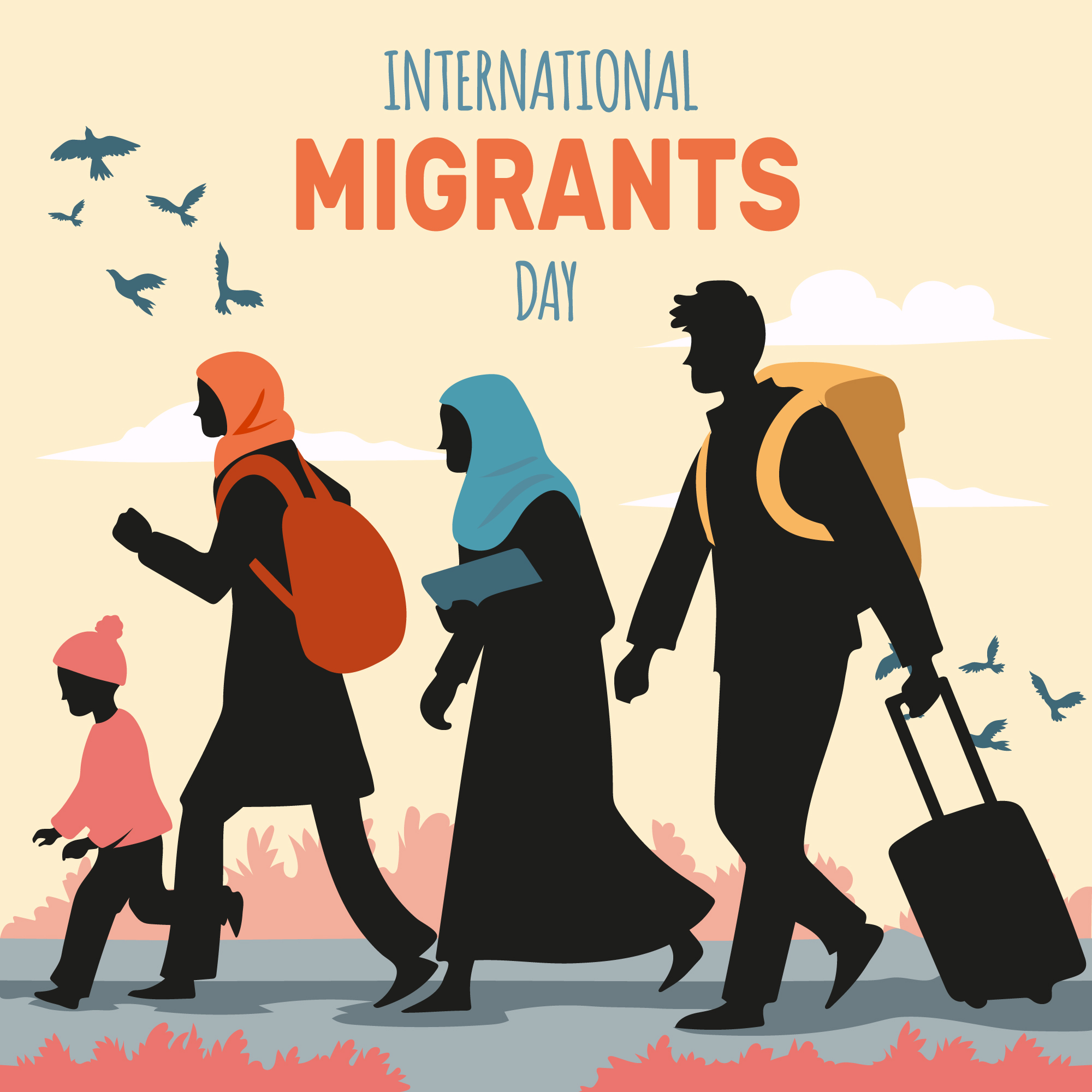
Migration is a complex process, influenced by various factors and drivers such as conflict, climate change, economic pressures, persecution and political crisis. The migrant’s journey is often fraught with many struggles and dangers including violence, discrimination and exploitation. Many migrants, particularly those in an irregular situation, experience difficulty accessing basic services such as healthcare, housing and education. Due to their legal status, some migrants face challenges with obtaining employment and become vulnerable to human trafficking and forced labour. As a result, they experience economic hardship and poor health and are at risk of extortion, gender-based violence and abuse. In the case of international students and graduate researchers, some decide to remain in the host country and pursue careers after graduation. However, there is often a mismatch between their skills and available employment opportunities. Complex immigration policies and difficulties with integration and settlement are other challenges they have to navigate.
Today, migration is a contentious issue globally, particularly in Europe with growing nationalism driven by immigration concerns, economic issues, national identity and cultural change. This dynamic has led to the promotion of restrictive migration policies aimed at curbing irregular migration and increasing border control. However, this approach tends to frame migration as a problem and ignores its potential for economic growth and sustainable development through safe, legal routes.
Migration as a force for good
In spite of its complex nature and the concerns surrounding it, migration remains a force for good and a contributor to sustainable development. Migrants contribute to the workforce of receiving nations by providing skilled labour, which helps to address labour shortages across multiple sectors. International students and academics in particular, play a critical role in creating a knowledge-based economy. Migrants also help increase economic growth through entrepreneurship, innovation and financial remittances sent back home to their relatives. This can be an important source of funding for infrastructure projects in their countries of origin. Migration also contributes to the strength and diversity of populations.
Making migration mutually beneficial
Migration can be beneficial for both the receiving and origin countries of migrants. Collaboration between partner countries in key areas such as education and capacity building can help address development objectives on both sides. Strategies that foster mutually beneficial migration include aligning labour migration with the receiving country’s labour needs and goals. For instance, a partnership between countries in the European Union (EU) and African Union (AU) aims to harness Africa’s educated youth population to bridge the skill gap in the Europe due to the region’s ageing population. Through several initiatives, the EU-AU partnership aims to reduce unemployment and irregular migration.
Conclusion
People have always and will always continue to move. It is simply human nature. The migrant’s journey is one of resilience, progress, hope and immense potential. The onus is on the international community and governments to explore this potential by creating safe, regular pathways for migration. This includes the implementation of migrant-friendly policies that promote inclusion as well as exploring better migration cooperation. Increased commitment to global cooperation on international migration by all stakeholders will help ensure that the migrant’s journey ends in prosperity for everyone.
Sources
- Bisong A. (2025). Geopolitical shifts and human mobility: rethinking EU-Africa migration cooperation. ECDPM. https://ecdpm.org/work/geopolitical-shifts-and-human-mobility-rethinking-eu-africa-migration-cooperation
- Dilek Fidler S., Clarke L. and Wang R. (2025). From mobility to migration: the impact of socio-cultural and professional factors on international post-doctoral capabilities. https://doi.org/10.1080/03075079.2025.2552824
- EU (2024). International Migrants’ Day : 18 December 2024 https://www.europarl.europa.eu/RegData/etudes/ATAG/2024/767161/EPRS_ATA(2024)767161_EN.pdf
- OHCHR (2025). About migration and human rights. OHCR and migration. https://www.ohchr.org/en/migration/about-migration-and-human-rights
- Paez-Deggeller V. (2025). Top Statistics on Global Migration and Migrants. Migration Policy Institute (MPI). https://www.migrationpolicy.org/article/top-statistics-global-migration-migrants#students
- UN (2024). International Migrants Day 18 December. https://www.un.org/en/observances/migrants-day
- UN (2025). International Migration. https://www.un.org/en/global-issues/migration
- WHO (2024). International Migrants Day 2024 : WHO works to ensure health-care access at every step of migration journey. https://www.who.int/europe/news-room/events/item/2024/12/18/default-calendar/international-migrants-day-2024
Susan Ekuri
Research writer and independent global health and development consultant
Bio: medical graduate and public health expert with a passion for international development.
[1] IOM (2024). World Migration Report 2024. https://worldmigrationreport.iom.int/msite/wmr-2024-interactive/